
Preparing article…
Explore related services: In-Slab HVAC Duct Scopes
RedBud uses camera equipment to inspect accessible duct runs located below the slab. Learn what an in-slab duct scope can show and what it cannot.
Explore related services: In-Slab HVAC Duct Scopes
Most HVAC ductwork is visible in an attic, crawlspace, basement, or mechanical area. Some homes are different. When air-distribution ducts are located below the concrete slab, large portions of the system are concealed and cannot be visually evaluated during a standard home inspection.
That is where an In-Slab HVAC Duct Scope can be useful.
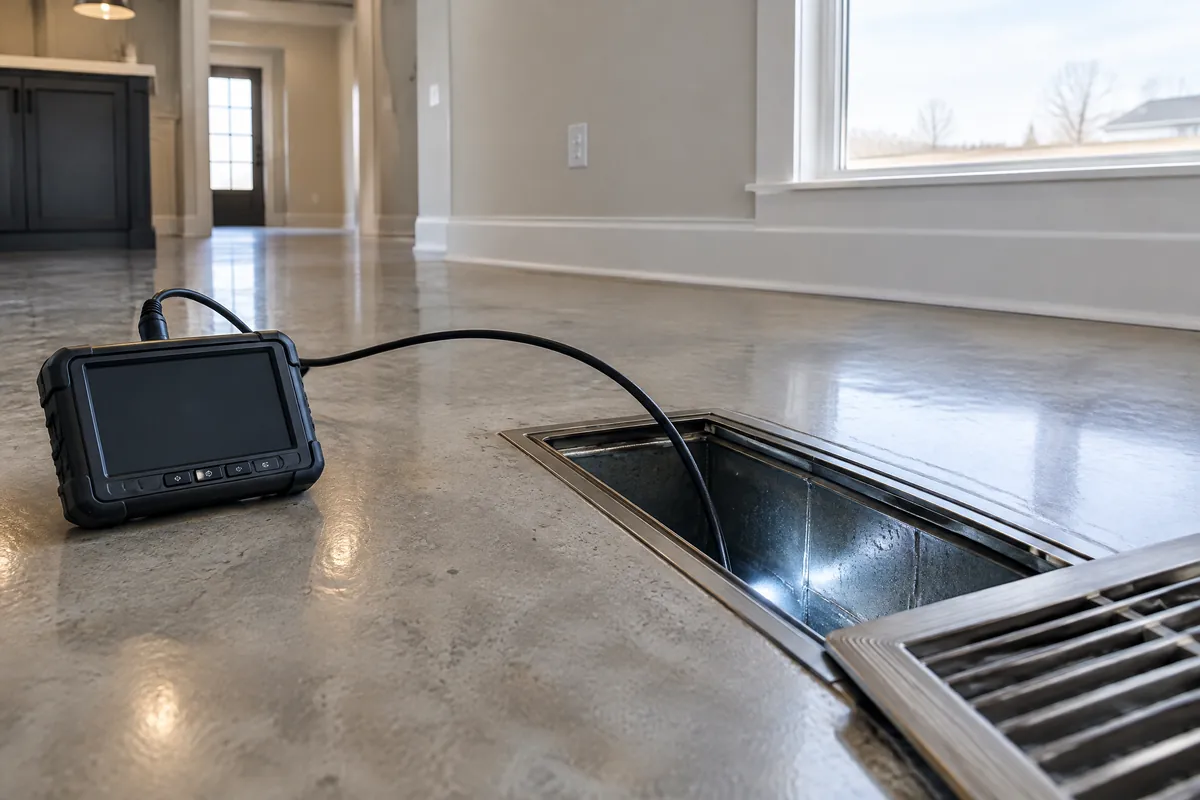
Redbud uses flexible camera equipment to examine accessible portions of concealed in-slab duct interiors from available registers or openings. The goal is to see conditions inside a system that otherwise remains out of view.
A standard home inspection can evaluate accessible HVAC equipment, controls, and visible distribution components. It cannot see through concrete into a buried duct run.
A camera scope may reveal visible moisture, standing water, debris, deterioration, damaged areas, material conditions, or accessible duct joints that deserve further attention. The amount of ductwork that can be examined depends on the layout, access, bends, obstructions, and the condition of the system.
This is not a promise that the camera will reach every foot of every branch. Like a sewer scope, the value comes from direct visual information about the portions that are accessible.
Below-slab ductwork can be especially difficult to evaluate when a client has concerns about moisture, odors, debris, or unexplained indoor-air conditions. If water is entering or collecting in a duct, the problem may not be obvious from the living space.
A camera image can help determine whether there is visible evidence worth sending to an HVAC contractor or another specialist.
That does not mean every indoor-air concern is caused by ductwork. Redbud also offers Mold Inspection & Testing and Indoor Air Quality Testing for Mold as separate services. If the concern is environmental rather than mechanical, the inspection approach may be different.
The service is focused on accessible interior duct conditions. It is not a full duct-design analysis, airflow balancing service, energy audit, or guarantee about HVAC performance.
A house can have clean-looking duct interiors and still have an HVAC problem somewhere else. Likewise, a camera may show a duct condition that needs attention even when the heating and cooling equipment appears to operate normally.
Keeping those scopes separate is important because it helps the client understand exactly what the camera is being used to answer.
An in-slab duct scope makes the most sense when the property actually has below-slab ductwork and the buyer or owner wants more information about the concealed runs. It may also be useful when there is a known concern, visible moisture evidence, unusual debris, or a history that makes the client want a direct look inside.
If you are not sure whether the house has in-slab ducts, ask before adding the service. Redbud's client-services team can help you determine whether the inspection applies to the property.
When accessible, the scope can produce recorded footage and representative images that are included or referenced in the inspection documentation. The inspector explains what was visible and whether a condition warrants HVAC specialist review.
For Oklahoma buyers, that is the practical benefit. You do not need to become an expert on buried duct systems. You need enough reliable information to know whether the concealed air path appears normal in the accessible areas or whether another professional should take the next step.
The service can also be useful when a buyer is comparing a visible concern with a seller's repair history. If a section of in-slab duct has been repaired, lined, abandoned, or modified, camera footage may help document what is currently accessible. That does not replace contractor records, but it can make the next HVAC conversation much more specific.