A sprinkler controller lights up during a November showing in Moore, but the seller says the irrigation system has been winterized. Can the inspector still check it? There may be useful visible observations to make, yet running the zones is a separate question. Before the appointment, establish whether water has been shut off or components drained so the inspection does not undo seasonal protection.
Winterized is a system condition, not a calendar date
Cold-weather limitations depend on the installed equipment, its shutdown status, and conditions at the property. A mild afternoon does not tell an inspector whether a system is ready to operate. Some zones may have been drained while others have different arrangements.
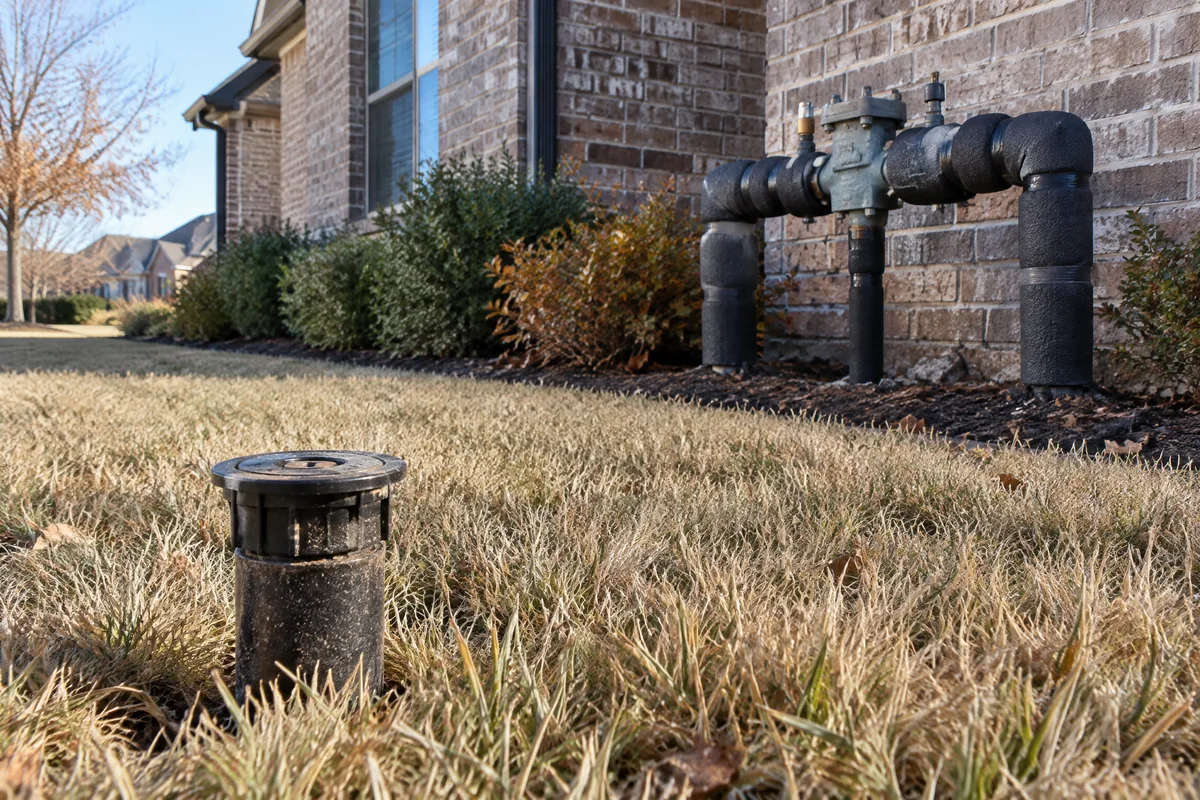
Oklahoma State University Extension identifies exposed pipes, valves, and backflow devices as components needing winter protection. That makes the owner's maintenance history relevant to a Moore inspection, rather than assuming underground piping means every component is protected.
Ask the owner when the system was last operated and whether an irrigation contractor performed the shutdown. A service receipt can explain the intended configuration; it cannot establish that every zone currently works.
Useful observations can remain without flowing water
Redbud Property Inspections offers irrigation and sprinkler inspections focused on accessible controls, zones, heads, and obvious visible or operational defects. When operation is restricted, accessible components can still provide information. A visibly broken head or damaged controller enclosure remains worth documenting even when the system is off.
The inspector may also observe visible backflow equipment and freeze-protection conditions within the service scope. Existing insulation or covers can limit that view. Their presence does not establish the condition of concealed parts, and a visual observation is not a backflow performance test or certification.
A powered controller does not prove zone performance
Hunter's winterization guidance describes controllers that remain powered while watering is disabled. Seeing a display therefore does not confirm that valves open, heads rise, or water reaches each zone. If zones cannot run, spray coverage and leaks that appear only under pressure remain unanswered.
Restarting a drained system changes the inspection conditions
Turning on the water simply to obtain a demonstration can refill components that were drained for winter. Hunter explains that water left in irrigation piping or backflow assemblies can freeze and damage them. An inspection should not introduce that risk just to replace a limitation with an operational result.
Do not open shutoff valves, override a shutdown setting, or ask someone to force a zone to run before the visit. Share what is known and let the inspector determine what can appropriately be operated. If restarting requires an irrigation contractor, that is separate work.
The same distinction matters when other outdoor equipment is inactive. Our discussion of winterized pool equipment in Bixby explores why accessible observations and operational checks may need to be handled separately.
Read a nonoperated zone as an unanswered question
A useful report identifies what was observed, what was not operated, and why. For example, a note that zones were not run because the system was reported winterized has a different meaning from a documented broken sprinkler head. One describes a testing limitation; the other records a visible condition.
Neither a dry lawn nor an absence of visible leaks establishes that buried lines are intact. Likewise, winterization does not automatically mean a defect exists. Keep the operational uncertainty separate from actual findings.
Ask whether the limitation affected every zone or only part of the installation. Then discuss whether an irrigation contractor's evaluation or a later operational inspection would answer the remaining questions when conditions allow.
Prepare access and records without changing the shutdown
For a home inspection in Moore, provide the controller location, available zone descriptions, shutdown records, and notes about previous leaks or repairs. Arrange permission and clear access to controls without removing protective wrapping or altering valves. Winterization maintenance is not part of an irrigation inspection.
For broader seasonal planning, see our fall home maintenance guide; irrigation shutdown still needs equipment-specific professional attention.
If the property is newly built, irrigation readiness deserves the same advance communication as other systems. The guide to utilities and access for Mustang new-construction inspections explains that preparation distinction.
Schedule with Redbud Property Inspections and mention winterized sprinklers when booking. That gives the team context to discuss realistic inspection limits and helps you plan for information that may need to wait until appropriate operating conditions return.