
Preparing article…
Explore related services: Homebuyer Inspections
Buying after hail, wind, or heavy rain? Learn what an Oklahoma home inspection can reveal about roofing, drainage, moisture, exterior damage, and more.
Explore related services: Homebuyer Inspections
Oklahoma weather can change the way a property needs to be evaluated in a hurry. A house may have looked fine when it was listed, then go through strong wind, heavy rain, hail, or a sudden temperature swing before closing. That does not automatically mean there is damage, but it does mean buyers should pay attention to the parts of the property that take the most punishment from weather.
Roofing usually gets the first attention after a storm, and for good reason. Missing or damaged shingles, displaced flashing, exposed fasteners, damaged vents, or impact marks can all deserve a closer look. But a useful inspection also considers what is happening below and around the roof. Accessible attic areas can show moisture staining, damaged decking, ventilation problems, or evidence that water has moved farther than it appears from outside.
At Redbud Property Inspections, a buyer inspection is a broad visual inspection of the accessible home rather than a single-issue storm check. That matters because a weather event can reveal weak points in several systems at once.
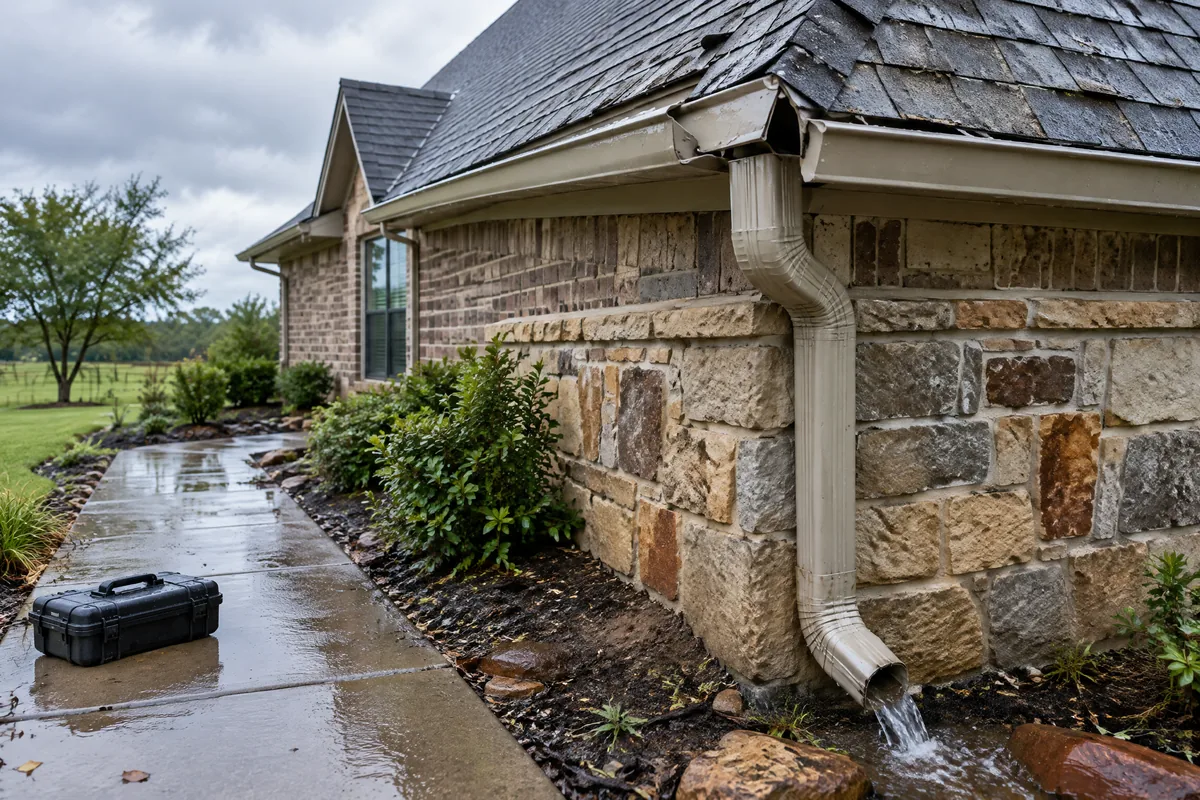
Heavy Oklahoma rain has a way of showing where water wants to go. Gutters, downspouts, grading, low areas near the foundation, and surface drainage all deserve attention. A roof can shed water correctly and a property can still have trouble if that water is dumped beside the foundation or trapped against the structure.
For buyers, this is especially useful information because drainage concerns are often not dramatic during a dry showing. Evidence in the yard, around the exterior, in a crawlspace, or near foundation walls may tell a different story.
Siding, trim, windows, doors, decks, fencing, masonry, and exterior penetrations can all be affected by wind-driven rain and repeated exposure. The goal is not to label every cosmetic mark as a major defect. It is to identify conditions that affect the building envelope, safety, water management, or future maintenance.
Oklahoma properties also vary widely in age and construction. A newer home can have installation issues that show up under severe weather, while an older home may have repairs from several different eras. Looking at the property as a connected system helps make those differences easier to understand.
After heavy weather, buyers should pay attention to staining, damaged finishes, musty areas, swelling materials, and other signs that water may have entered. An inspection may include moisture measurements or thermal imaging when those tools help clarify an observation, but the tools are only part of the process. The important part is connecting the evidence to the actual building condition.
If a moisture concern points toward a possible mold issue, Redbud also offers a separate Mold Inspection & Testing service and Indoor Air Quality Testing for Mold. Those are different services from a standard buyer inspection and can be added when the situation calls for a closer look.
A professional home inspection is not a promise that a property has never been affected by weather, and it is not a roof insurance inspection. It is a practical review of visible and accessible conditions at the time of the inspection.
That distinction is important. The goal is to give you enough information to make the next decision: ask for more information, bring in a specialist, plan a repair, monitor a condition, or simply understand what normal ownership will involve.
Redbud serves buyers in the Oklahoma City and Tulsa areas as well as communities across Oklahoma by request. If severe weather has passed through before your closing, tell the inspection team what happened and when. That context can help your inspector pay close attention to the areas most likely to show useful evidence.