
Preparing article…
Explore related services: Radon Testing
RedBud uses an Airthings Corentium Pro for 48-hour short-term radon testing. Learn how testing works and why radon cannot be judged by sight or smell.
Explore related services: Radon Testing
Radon is different from most things a home inspector evaluates because there is nothing meaningful to see. You cannot judge a property's radon level by the age of the house, how clean the basement looks, whether the home has a crawlspace, or whether anyone has noticed an odor.
If you want to know the radon level in a particular home, you need to measure it.
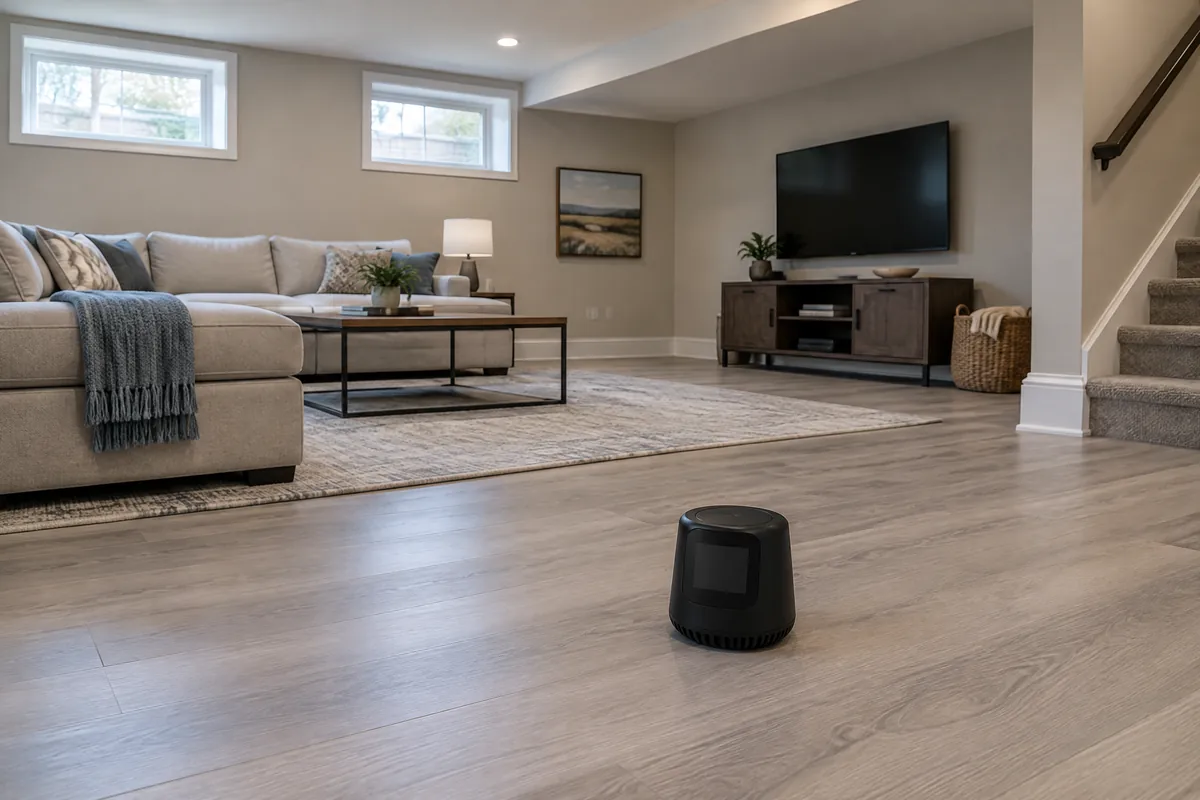
Redbud provides 48-hour short-term radon testing using an Airthings Corentium Pro continuous radon monitor. The service is designed to produce a documented measurement under controlled building conditions rather than relying on assumptions about the property.
A continuous radon monitor collects data throughout the test period. That is useful because radon levels can change over time. A time-based record gives the inspector a better picture than a single spot reading.
Redbud places the monitor according to the test setup, provides closed-building condition guidance, retrieves the equipment after the required period, and reports the measurement results.
The important point is that the test belongs to that property and that time period. It is actual data from the home you are evaluating.
A radon test works best when the building conditions are controlled appropriately. Doors and windows, HVAC operation, occupancy, and interference with the monitor can all affect the test environment.
That is why the setup and instructions matter just as much as the device itself. Clients and occupants should follow the test conditions provided so the measurement is as useful as possible.
During a real estate transaction, it is also smart to schedule early enough that the 48-hour test can be completed without squeezing the inspection contingency timeline.
Redbud's role is testing and reporting. The company does not perform radon mitigation.
That separation keeps the inspection focused on the measurement. If the results indicate that a mitigation professional should be consulted, the next conversation is with a qualified mitigation provider.
For buyers, that means you are not receiving a sales pitch from the same company that would benefit from installing a system. You are receiving the test result and guidance on the next appropriate step.
Many clients coordinate radon testing with a buyer inspection so the main property inspection and the environmental test fit into the same due-diligence period. It can also be scheduled separately when a homeowner, seller, or other client wants a current measurement.
Redbud serves Oklahoma City, Tulsa, and communities across Oklahoma by request, so the client-services team can help determine whether the timing and location work with the 48-hour test process.
A beautifully maintained home can have a radon level that deserves attention. A rough-looking property can test low. There is no reliable visual shortcut.
That is what makes radon testing straightforward from a decision standpoint: if the question matters to you, measure it.
The monitor does not tell you whether to buy the house, and the inspector does not make that decision for you. The value is having a documented number instead of guessing. Once you have that information, you can decide whether any follow-up belongs in your transaction or ownership plan.
For sellers, a recent radon test can also prevent last-minute confusion when a buyer raises the question during a short inspection period. For homeowners who are not moving, testing can simply establish a current baseline. In every case, the useful part is the same: the result comes from a monitor in the actual building rather than an assumption based on the neighborhood, foundation type, or age of the home.