Preparing article…
Explore related services: Drain / Sewer Scope Inspections
A sewer scope can reveal problems hidden inside the main drain line that normal fixture testing cannot show. Learn what RedBud checks and when to add one.
Explore related services: Drain / Sewer Scope Inspections
A home can have sinks that drain, toilets that flush, and showers that appear to work normally while still having a problem inside the main drain or sewer line. That is one reason a sewer scope can be such a useful add-on during an Oklahoma real estate transaction: it looks at a part of the property that a standard visual home inspection cannot see from the surface.
During a home inspection, plumbing fixtures are operated and visible plumbing components are evaluated within the inspection scope. That tells you a great deal about how the system is functioning at the time of the inspection.
What it does not show is the interior condition of the concealed main drain line.
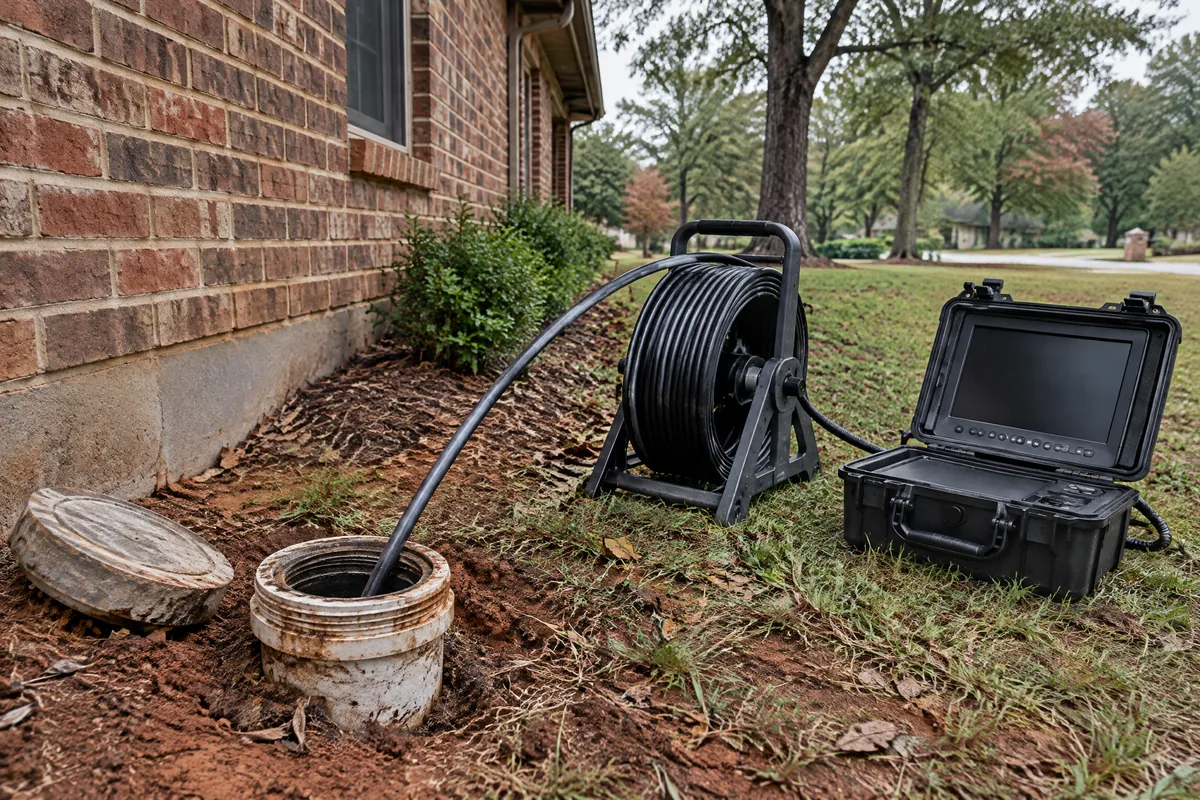
Redbud's Drain Line / Sewer Scope service uses a high-definition camera from a suitable available access point to examine accessible portions of that line. The camera can provide direct visual information about conditions that would otherwise remain hidden.
A sewer camera may reveal root intrusion, obstructions, damaged areas, offsets, deterioration, unusual transitions, or sections where drainage conditions deserve further evaluation. The exact amount of line that can be viewed depends on the property, access, configuration, and conditions during the inspection.
That last point matters. A sewer scope is not magic, and it is not a guarantee about every buried foot of piping. It is a targeted inspection of the accessible line from the available access point. When the view is limited, that limitation belongs in the report too.
People often associate sewer problems with very old houses, but age is only one factor. A line can have repairs, material transitions, settling, root exposure, or installation issues that are not obvious from the age of the home alone. Properties with mature landscaping can also raise questions about buried piping, and remodeling history can add another layer of uncertainty.
For buyers in established Oklahoma City and Tulsa neighborhoods, a sewer scope is often a practical way to get more information before closing. It can also make sense on newer properties when the buyer simply wants a direct look at a concealed system that can be expensive to repair.
The benefit is not simply having a camera in a pipe. The useful part is seeing the condition in context and documenting what was observed. Redbud may provide recorded scope footage when conditions allow, representative images, access observations, and practical next steps when a concern is found.
That documentation can make a follow-up conversation with a plumber or sewer contractor much more focused. Instead of starting with "something may be wrong," you can point to the location and visible condition that raised the concern.
On properties with septic systems, buyers sometimes assume a septic inspection covers the building's entire drain line. It does not necessarily do that. Redbud keeps conventional septic, aerobic septic, and drain-line scope services distinct because they answer different questions.
A conventional septic inspection focuses on available records, accessible components, and visible field conditions. An aerobic septic inspection includes accessible controls, alarms, aeration or pumping components, and dispersal operation when conditions allow. A drain-line camera scope looks inside accessible portions of the building's main drain line.
If you are not sure which combination fits the property, Redbud's client-services team can help you sort out the options before scheduling. The goal is not to pile on add-ons. It is to choose the services that match the actual systems at the property and the questions you need answered before closing.