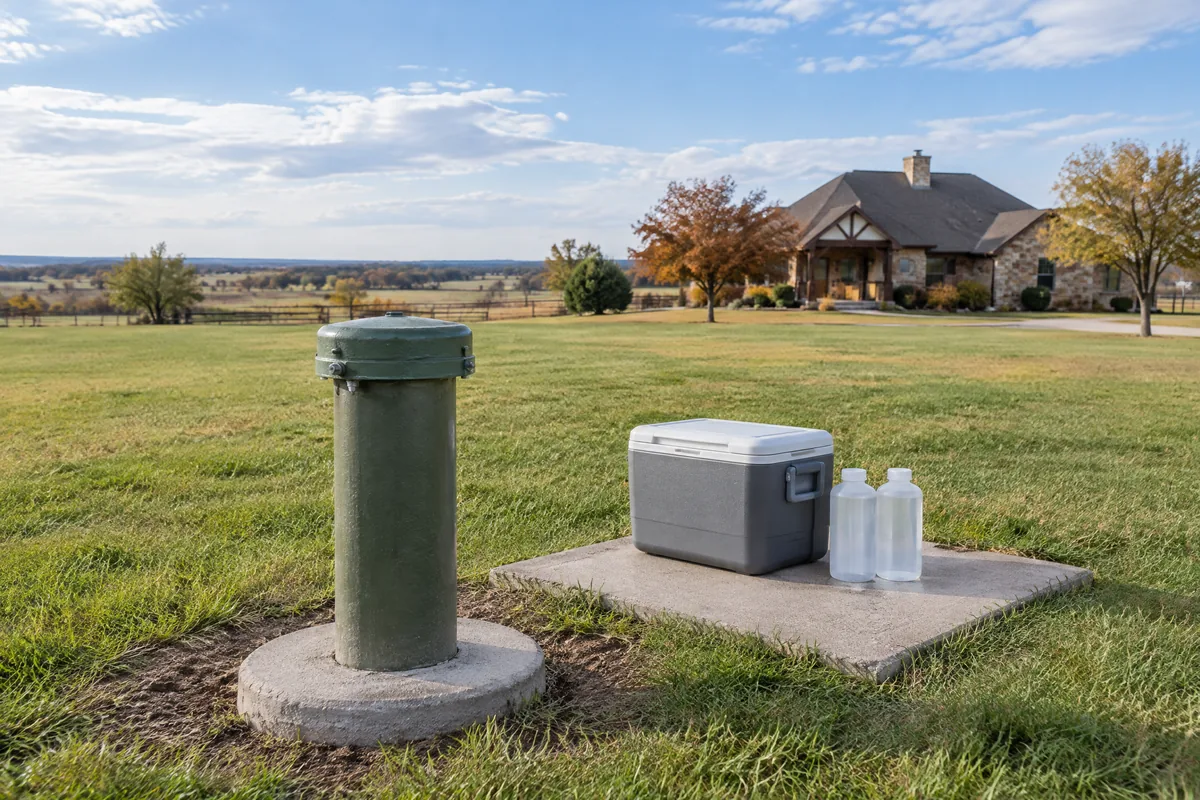
If a Piedmont property’s well was recently disinfected, tell your inspector before the water sample is scheduled. “The well was serviced” is a useful start, but the date, reason, and work performed matter. Those details help distinguish a sample collected after treatment from one intended to describe ordinary operating conditions.
Why the treatment date matters
Shock chlorination introduces chlorine into a well and connected plumbing to disinfect the system. A bacteria result collected around that work needs context: recent treatment can reduce bacteria without establishing how the system will perform over time. A result reporting bacteria absent is not a permanent water-quality guarantee.
Oklahoma DEQ’s well-disinfection guidance identifies several reasons for disinfection, including completed repairs and a previous positive bacteria sample. That means recent chlorination does not automatically indicate a longstanding problem. Ask why it was done rather than drawing a conclusion from the treatment alone.
Share a short service timeline
Before the appointment, gather the contractor’s invoice and any written treatment instructions. Tell Redbud Property Inspections when disinfection occurred, whether pump or plumbing work accompanied it, and whether the contractor documented subsequent flushing or testing. If a date is uncertain, say so; an estimate should not become a confirmed fact in the inspection record.
For example, an invoice showing a pump replacement followed by disinfection tells a different story from treatment following a positive bacteria result. Both deserve accurate documentation. Neither record, by itself, establishes what a new sample will show.
Mention treatment equipment as well. A filter, softener, or ongoing disinfection system helps explain what water reaches a particular faucet. The inspector and laboratory need to understand the sampling location and the question being asked, not simply whether the kitchen water looks clear.
Include earlier laboratory reports
Send the complete earlier report rather than a message saying the water “passed.” Collection dates, sample locations, and the actual tests requested make comparisons more useful. Keep before-treatment and after-treatment reports identifiable. On a property with an aerobic septic system, the same record-gathering habit applies to alarm history and service records, although those records cannot establish well-water quality.
Confirm sampling readiness with the laboratory
Do not assume that next-day sampling, a vanished bleach odor, or a particular number of days will satisfy the receiving laboratory. Ask the inspection team to confirm the applicable post-disinfection timing and how chlorine clearance must be checked. The CDC’s emergency well guidance explains that sampling follows removal of chlorine; its emergency instructions are not a substitute for directions specific to this appointment.
Bottle preparation, sample handling, and delivery also matter. Oklahoma DEQ’s laboratory guidance notes that collection instructions accompany sampling kits and that analyses have specific processing times. Coordinate these details before choosing a collection date, particularly when an inspection appointment falls close to a transaction deadline.
Avoid adding disinfectant just to prepare for the visit. Do not change treatment settings, bypass equipment, or flush the system solely on the strength of a general article. Have the responsible well professional and laboratory clarify any preparation needed. If sampling must wait, ask what inspection observations can proceed and how the separate sample appointment will be documented.
Keep bacteria, flow, and chemistry questions separate
Redbud’s well inspection service includes accessible well and pressure-system observations, observed operation, a basic calculated flow-rate test, and standard total coliform and E. coli laboratory testing. Recent disinfection is especially relevant to that bacteria sample; it does not turn the flow test into a water-quality measurement.
Likewise, bacteria testing does not measure every dissolved chemical or mineral. If you have another specific concern, identify it when scheduling so the requested tests can be discussed. The existing guide to private-well inspections and flow testing explains the broader scope without treating those different questions as interchangeable.
Coordinate the Piedmont visit before arrival
For a Piedmont home inspection, confirm access to the wellhead, pressure equipment, and proposed sampling faucet. If the property also has conventional septic, check its access separately; buried tank lids create a different inspection limitation, not a reason to infer a well-water result.
When you schedule with Redbud Property Inspections, include the disinfection date and available records. Early communication helps the team plan the visit and explain any sampling limitations before an appointment is treated as ready.